Summary
You have a lot of choices when it comes to picking a streaming device. Most people go with Roku and call it a day, while many others use the streaming offered by their gaming console or built into their smart TV.
But over ten years ago, Nvidia, a company that is now synonymous with AI, made a streaming device that people are still trying to buy today because it was and still is one of the most powerful streaming devices ever released.
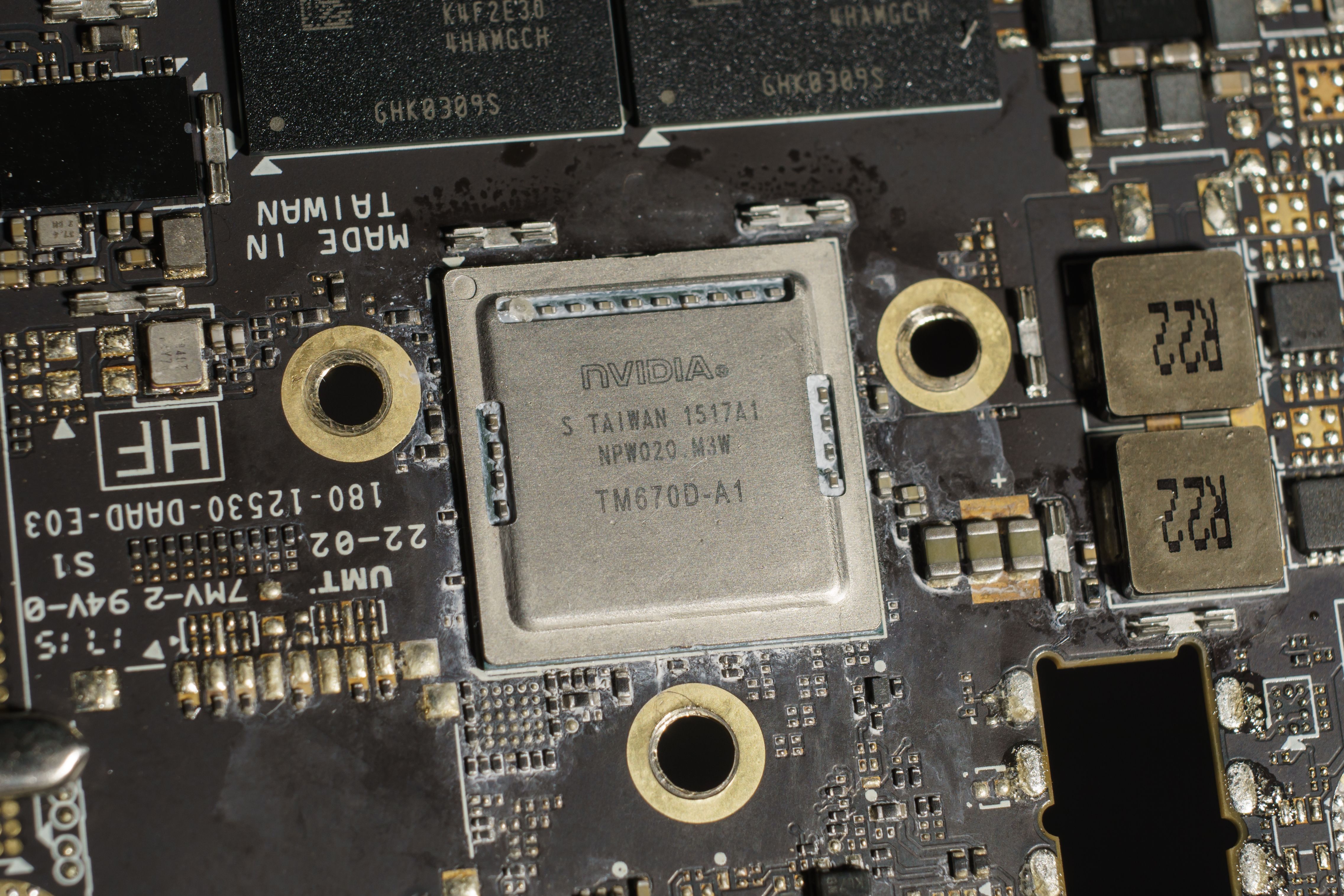
The SHIELD TV has 256 GPU cores
The Tegra X1+ SoC outclasses almost every other streamer
|
Device |
SoC / Chipset |
GPU |
CPU |
|---|---|---|---|
|
Nvidia Shield TV Pro |
Nvidia Tegra X1+ (16nm) |
256 CUDA cores — NVIDIA Maxwell |
8-core — 4× Cortex-A57 + 4× Cortex-A53 |
|
Apple TV 4K (2026, 4th gen) |
Apple A19 (3nm) |
5-core Apple GPU |
6-core — 2 performance + 4 efficiency |
|
Roku Ultra (2024) |
Realtek RTD1319VR (quad-core Cortex-A55 family) |
2-core Arm Mali-G31 |
4-core Arm Cortex-A55 |
So why did Nvidia put a 256-core GPU into their streamer? For two reasons.
(A bit of a disclaimer on the above comparison chart: Apple doesn’t publish exact GPU specifications on its streaming products. The above assumes that the A19 used in the fourth-generation Apple TV 4K is similar to the iPhone 17.)
The SHIELD TV can upscale non-4K and non-HD content
The first reason Nvidia put such a powerful GPU in is for 4K upscaling. When the SHIELD TV came out in 2015, the amount of 4K content was limited if you recall, but some people were starting to buy pricey 4K TVs.
Nvidia utilized the powerful GPU of the SHIELD TV to use AI to upscale non-4K content with neural networks to try to recreate image data not present in the original content. And the results are genuinely good: the SHIELD TV makes both HD and non-HD content look remarkably sharper with upscaling turned on — definitely not as good as native 4K, but when watching old movies, the upscaling really cleans up the picture quality.
There’s even a built-in split-screen comparison tool in the SHIELD TV, where if you tap and hold the menu button on the remote, you’ll get a dividing line on the screen that lets you see the original content on one side, and the upscaled content on the other side. This feature shows how confident Nvidia was in their upscaling. And it shows: upscaling non-4K content offers significant improvement in my testing. It’s not perfect, but I’ve found even 1990s content from Netflix (including older thrillers), once upscaled, looks much better.
It’s also built for gaming
The second reason Nvidia used such a powerful GPU in their streaming device is for gaming. In fact, many regard the SHIELD TV as primarily a gaming console that also happens to be an Android TV streamer.
Not only can you connect a variety of controllers to the SHIELD TV and play thousands of games from Google Play, but you can also access GeForce NOW, which taps into services like Steam, Ubisoft Connect, Amazon Luna, Xbox/Microsoft and Epic Games. Not only that, but the hardware on the SHIELD TV can natively run emulation for retro 8/16-bit systems, lending further to its gaming versatility.
Overkill? Maybe, but don’t you want the fastest streaming device?
Since it runs Android TV, you get access to pretty much every major streaming platform you can think of, and the customizable homescreen lets you get content recommendations and set up streaming apps as you see fit. Nvidia also does a nice job with updates — while it’s only on Android TV 11, Nvidia regularly updates the software with security updates and patches. The overall performance of the device is fantastic — everything is just fast with almost no lag.
But to be totally honest, 256 GPU cores is indeed overkill for the average person. In my house, I have a variety of streaming devices that are far less expensive and they work just fine, mostly from Roku (which is the most popular streamer in the US). But some people want it all, and the SHIELD TV offers that (though at a higher price, of course).
The SHIELD TV also has ethernet
While I run my SHIELD TV off of Wi-Fi (it maxes out at Wi-Fi 5), it also has a 10/100/1000Mbps ethernet port for faster data speeds. For video, the SHIELD TV has an HDMI 2.0b port with HDCP 2.2 and CEC support.
The SHIELD TV Pro adds expandable storage
While I personally own the lower-tier SHIELD TV, which has been discontinued, but Nvidia still sells the higher-tier SHIELD TV Pro, which adds USB ports for expandable storage if you connect an external hard drive.
How to buy an Nvidia SHIELD TV
They’re getting hard to find
The SHIELD TV Pro used to be priced at 299 for a SHIELD TV Pro, if you can even find one because they’re sold out at most retailers. Your best bet is to keep an eye on Amazon and B&H, linked below.
 Nvidia SHIELD TV Pro
The Nvidia Shield TV Pro is a 4K streamer with a 256-core Tegra X1+ GPU, and it runs on Android TV. It has an ethernte port, microSD expansion and supports Dolby Vision and HDR10.
Nvidia SHIELD TV Pro
The Nvidia Shield TV Pro is a 4K streamer with a 256-core Tegra X1+ GPU, and it runs on Android TV. It has an ethernte port, microSD expansion and supports Dolby Vision and HDR10.