Summary
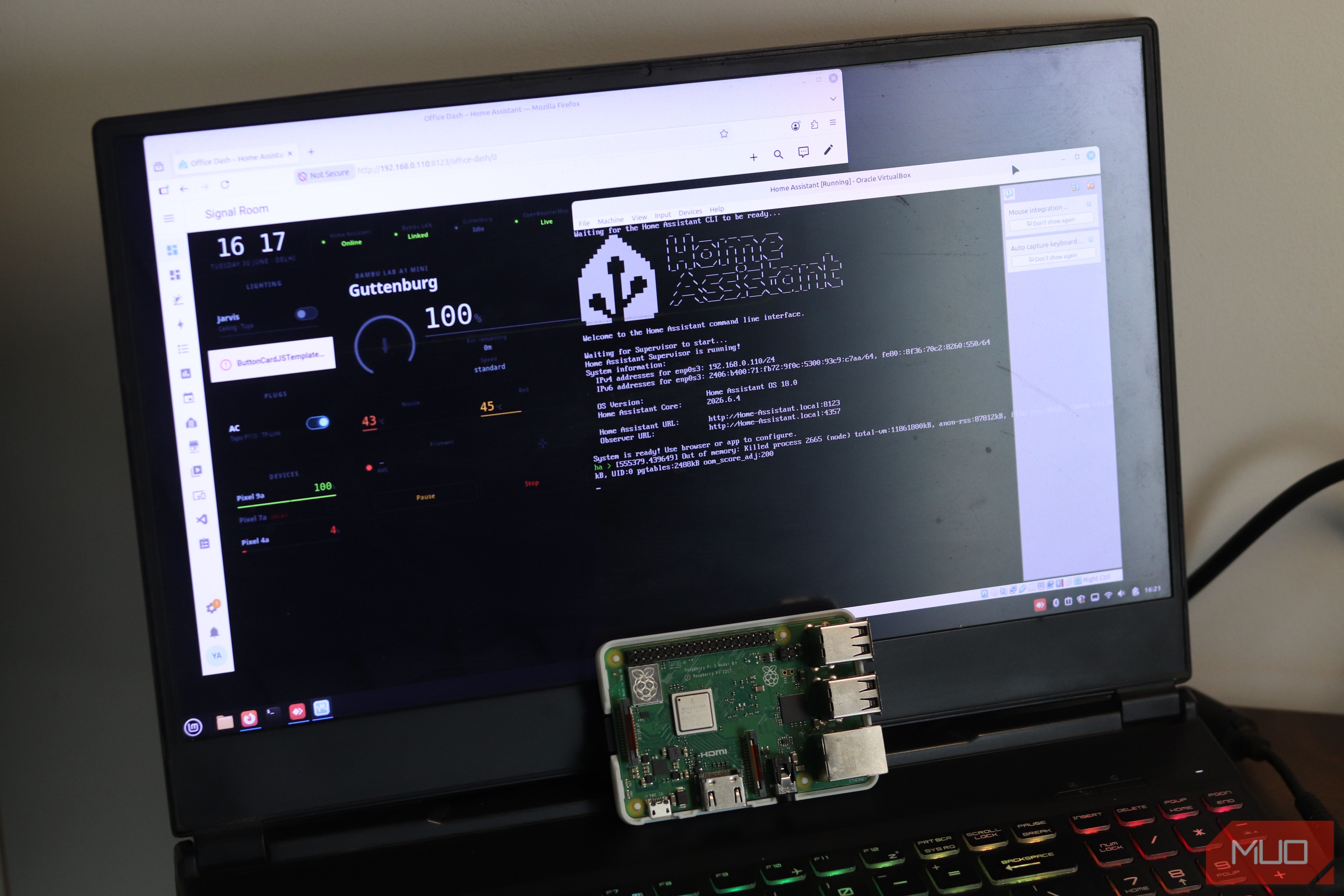
Open-source software usually comes with a compromise. You get freedom, flexibility, and control, but you may have to tolerate a few rough edges. On top of that, open-source software may not always be the best choice at all. But not if you’re using Home Assistant. It offers the transparency and independence of an open-source project while increasingly feeling like the polished software you’d expect from trillion-dollar corporations. After years of experimenting with self-hosting and open-source software, I can comfortably say that Home Assistant is one of the best pieces of open-source software I’ve ever used, and better than any commercially available smart home platform. Your smart home shouldn’t need a vendor’s permission to turn on a light Local control, no cloud dependency, and zero subscription surprises Most smart-home platforms make control conditional at best. Your lights, cameras, sensors, and switches may be physically inside your house and connected to your own Wi-Fi network, but the software controlling them lives somewhere else entirely. If the manufacturer changes its API, discontinues a product, introduces a subscription, or shuts down its servers, your smart home can quickly get much less smart. Home Assistant isn’t quite the same. It runs on your hardware, stores data locally, and communicates directly with the devices whenever their protocols allow it. Zigbee, Z-Wave, Matter, Thread, and ESPHome devices can operate without an internet connection, while cloud services are an optional nicety rather than being forced on you. That completely changes how your smart home feels. Home Assistant doesn’t behave like a sluggish remote for your house that goes down every time there’s an issue with the Wi-Fi. It works fast, is always available, and can work without the internet, like infrastructure that belongs to your house. It runs on a Pi, a VM, or a box you plug in, and doesn’t judge Beginner-friendly on top, YAML all the way down Another major advantage is the flexibility you get. If you don’t want to worry about hardware to run the software, you can buy Home Assistant Green, connect power and Ethernet, and start configuring devices right away. Someone like me who prefers DIY hardware can install Home Assistant OS on a Raspberry Pi, an Odroid, a VM, or an old x86 computer and run it that way. There’s even a Docker container if you’d rather manage the surrounding system yourself. That variety matters because open-source software often struggles at one of two extremes. Projects are either targeted at expert users and can scare newcomers off, or become so simple that advanced users lose the control that was appealing to them in the first place. Home Assistant serves both groups. The interface handles device discovery, integrations, dashboards, automations, backups, logs, updates, radios, users, and voice assistants. But behind the scenes, YAML, templates, events, scripts, APIs, and custom components remain available to anyone who wants to tinker with them. Home Assistant doesn’t care who made your gadget One system for every brand, plus a community store that keeps it weird The most impressive part of Home Assistant isn’t a single feature. It’s the environment the software builds around itself by turning unrelated products from different manufacturers into one coherent system. That is what many commercial smart-home ecosystems also promise, but their compatibility is limited to a handful of manufacturers at best. Home Assistant’s model is much broader and messier, but also far more useful. It can combine local devices, cloud services, DIY hardware, media systems, energy monitoring, security cameras, and regular network services without it all being from the same company. HACS, or Home Assistant Community Store, is a third-party marketplace for Home Assistant that extends that idea by providing a community ecosystem for custom integrations and interface components. Its 2.0 release improved installation, updates, and repair notifications, and it now sits under the Open Home Foundation’s umbrella. It’s complicated, but it finally stopped feeling like homework Entities and triggers now live in a GUI, and YAML waits patiently Home Assistant can still be complex, and pretending otherwise would undersell what it can do. A serious automation platform needs concepts such as entities, devices, areas, triggers, conditions, actions, and states. The achievement, however, isn’t removing those features. It’s presenting them in an accessible manner. Recent development has focused heavily on that balance. Drag-and-drop dashboards, responsive section layouts, better automation organization, improved backups, and more approachable voice-assistant setup are all slowly moving tasks out of configuration files and into the graphical interface. But that’s not to say you’re losing advanced functionality. I can create a basic automation visually, inspect or edit its YAML configuration file, add templates, call scripts, expose selected entities to a voice assistant, or even connect a locally hosted language model through Ollama. It’s progressive disclosure done properly. The simple path is more visible, but the more powerful option is still there. A nonprofit holds the steering wheel so the herd doesn’t wander off 21,000 contributors and a foundation that makes the boring decisions Large community projects, especially ones as large as Home Assistant, tend to become chaotic over time. Features accumulate, interfaces diverge, and the project loses direction as nobody wants to make the boring decisions required to turn promising software into reliable software. Home Assistant feels different because it has developed both community scale and institutional direction. GitHub’s Octoverse report named it the largest open-source project on the platform by contributors in 2024, when it had more than 21,000 contributors. The project also reported more than two million active installations in 2025. More importantly, Home Assistant is now governed by the nonprofit Open Home Foundation, which centers the development around privacy, choice, and sustainability. The foundation owns and governs Home Assistant alongside more than 240 related open-source projects, standards, drivers, and libraries, helping protect these projects from acquisition or abandonment. That structure is what makes Home Assistant feel less like a weekend hobby project and more like a proper piece of software. Not perfect, but it never locks the door behind you Updates will occasionally break things, and I’d still pick it every time Home Assistant isn’t perfect. Updates often expose obscure incompatibilities, community integrations sometimes break, and you might not agree with a decision the developers make, especially if it breaks or removes functionality you used. And that’s before you factor in installation, setup, and the fact that building the smart home dashboard of your dreams can take an entire weekend. But those frustrations come from possibility, not unnecessary restriction. Home Assistant lets me decide how far down the rabbit hole I want to go. More importantly, it never locks the door behind me. That is why I love this project. It respects my hardware, my data, my right to change things, and above all, my curiosity without limiting functionality in the slightest. Home Assistant shows that open source doesn’t have to mean settling for less. When open source gets enough contributors, funding, design discipline, and long-term purpose, it can create something commercial platforms rarely do: software that’s both genuinely excellent and genuinely yours.