Summary
Residential and commercial solar relies on solar panels to collect energy, so you’ll often see panels mounted on the roofs of homes and businesses. For many installations, this is an ideal location for harnessing UV rays, as the sun is always overhead, where it’s the least likely to be blocked by trees, nearby structures, and other types of obstacles. Unfortunately, roof-mounted panels aren’t always an option when you’re considering going solar.
Perhaps the roof is too old to carry the extra load. Or maybe you live in an apartment, where the last thing a landlord or management is going to let you do is climb up on the roof. But before you give up on your dream of selling electricity back to the utility company, consider this: the roof of your raised ranch or commercial building isn’t the only place you can mount solar panels. The greater world of solar systems is full of creative alternatives to traditional rooftop panels, and today, I’ll be breaking down a handful of these secondary panel placements.
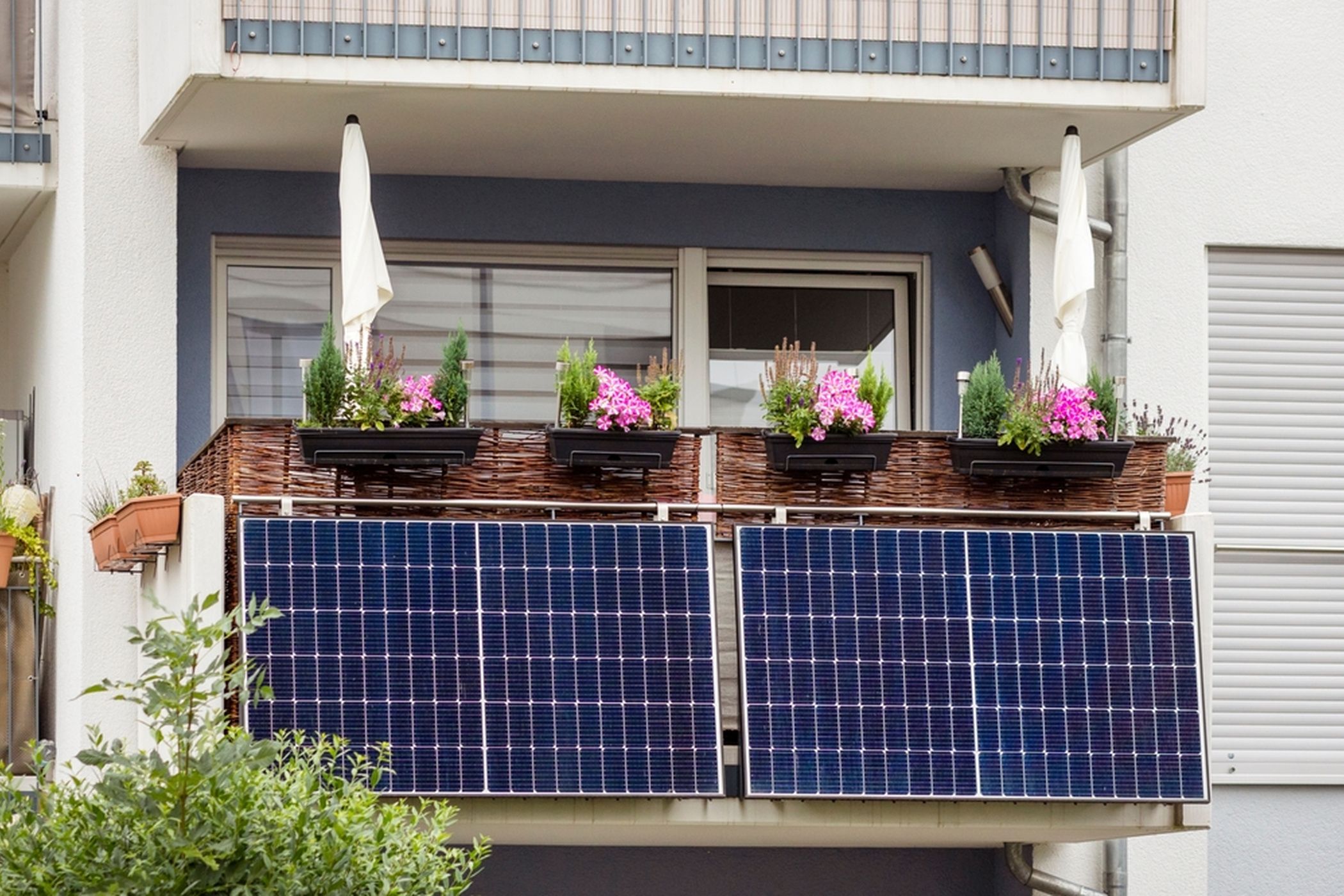
Invest in a solar balcony
Plug the sun into an outlet
Let’s say your house or apartment features a walk-out balcony of some type. Regardless of how large this space is, it’s going to be enclosed by partitioning – be it wood, fiberglass, metal, etc. You can actually hang solar panels off of these dividers, no professional installation required. Many balcony solar systems typically come with a micro-inverter, which converts the DC energy picked up by the panels into AC energy for your home or business. The final piece of the puzzle is plugging the inverter into an AC outlet to feed power back into your property.
A solar balcony is a great solution for apartment life, especially if you can get your hands on a budget-friendly kit. That said. You’ll also need to make sure that you’re legally able to install a micro-inverter rig in your state. As of October 2026, only five states have passed legislation in support of plug-in solar: Utah, Maine, Virginia, Maryland, and Colorado. However, many other states have introduced similar legislation, so the idea of a solar balcony could be pretty mainstream in the next few years.
Opt for a solar awning
Sun and shade working together
Have you been thinking about a DIY patio project? Nothing says “outdoor fun” like a retractable awning that covers your seating area; what’s even better is one with the ability to generate electricity. Solar awnings are exactly what the name implies: stationary or mobile awnings with solar panels attached. I particularly like this idea because you’re killing two birds with one stone: UV energy capture and shade.
Objectively, a solar awning has a higher upfront cost than traditional, roof-mounted panels. Reasons can include labor and material costs associated with the installation (e.g., running electrical, obtaining permits, etc.). If you’re planning on moving in the next couple of years, dropping 12K on a standalone, stationary awning probably isn’t the savviest move. Spending $2K on a small awning that mounts to an existing wall is a much easier task, and you could potentially take the hardware with you when it’s time to relocate.
As with any solar installation, you’ll also want to make sure your home or business is a good candidate for an awning. Wind, rain, and snow are rather inescapable, but some parts of the country deal with severe weather more than others.
 Nekteck 28W Portable Solar Panel Charger
- Brand
- Nekteck
- Output Power
- 28W Whether you are hiking, cycling, or climbing in the backcountry, a portable solar charger is one device that can help you stay powered up and connected. The Nektek 28W is one of the better portable solar panel chargers suitable for such off-grid activities. It’s lightweight and compact at around 23oz, and you can fold it down to the size of a notebook for easy storage. It also has convenient eyelets and hooks, so you can easily attach it to your backpack and charge while you explore. While it isn’t waterproof, with its IPX4 water-resistance rating, you’ll have plenty of time to get your charger to safety in the event of a downpour. It also offers heat and cold resistance; you can pretty much use it anywhere, no matter how hot the weather. And, if you are exploring more frigid areas, it is cold-resistant to -4 degrees Fahrenheit. It provides power for two USB devices and includes a micro-USB cable. You’ll be able to charge any smartphone, tablet, or other small and portable devices, though iPhones with a lightning connector will need to use their proprietary cable.
- Color
- Black
- Type
- Solar
- Battery Capacity
- N/A
- Cable included
- Yes
- Charging Ports
- 2x USB-A
Energize a garden space
Photosynthesis for the win
If mounting solar panels on your roof isn’t going to work out, but your backyard features a small- to medium-sized garden with numerous crops, flowers, etc., I urge you to look into solar gardening. The most basic garden setups require sun and water for healthy plant growth, so how about leaning on solar panels to power some parts of the process?
There’s an entire market of solar-powered garden tech: water pumps, fountains, and portable solar lights are a few that come to mind. You could also use something like the EcoFlow River 3 Plus (solar panel sold separately) to power certain outdoor equipment. Let’s think slightly bigger, though: I mentioned micro-inverters when discussing solar balconies, and these DC-to-AC power pushers can be just as useful for a garden space. You could install one or two standalone, ground- or pole-mounted panels, while feeding power into your garden or greenhouse’s electrical system.
If you’re planning on hiring out the job, be sure to look for pros that have performed this type of install before; your run-of-the-mill electrician may not have the skills necessary to quickly and safely get the work done.
 EcoFlow River 3 Plus
- Brand
- EcoFlow
- Dimensions
- 9.2×9.1×5.8 in Swap roof-mounting for walls Sheds and garages also count Wall-mounted solar panels are very much a thing; there are even photovoltaic windows that don’t look much different than regular windows. If your roof simply isn’t fit to handle the weight of solar tech, wall panels can be an excellent alternative. To reap the most benefits from this type of install, you’ll ideally be hanging panels on a south-facing wall for the most direct sunlight. I’d also do what I could to invest in panels that can be adjusted, either manually or via remote. Of the solar alternatives I’ve mentioned, this option is probably the least DIY-friendly, so don’t be afraid to consult the pros; a good consultation could even save you money if you were over-budgeting. Generally speaking, wall-mounted panels also aren’t as efficient as generating electricity in the summer months, because this is when the sun is at its highest position (one of the reasons roof panels are often chosen). But during the winter, when the sun’s angle is lower, wall solar pushes ahead as the better energy collector. Thinking beyond shingles and tin Going solar has some traditional connotations, but roof-mounted panels don’t have to be one of them. You can just as easily install solar tech in one or a few alternative locations, and the overall cost may be similar to or less than what you’d spend to put panels above your head. The solar industry is built on photovoltaic innovation, and manufacturers will always be looking for new ways to harness the sun’s UV rays.