Summary
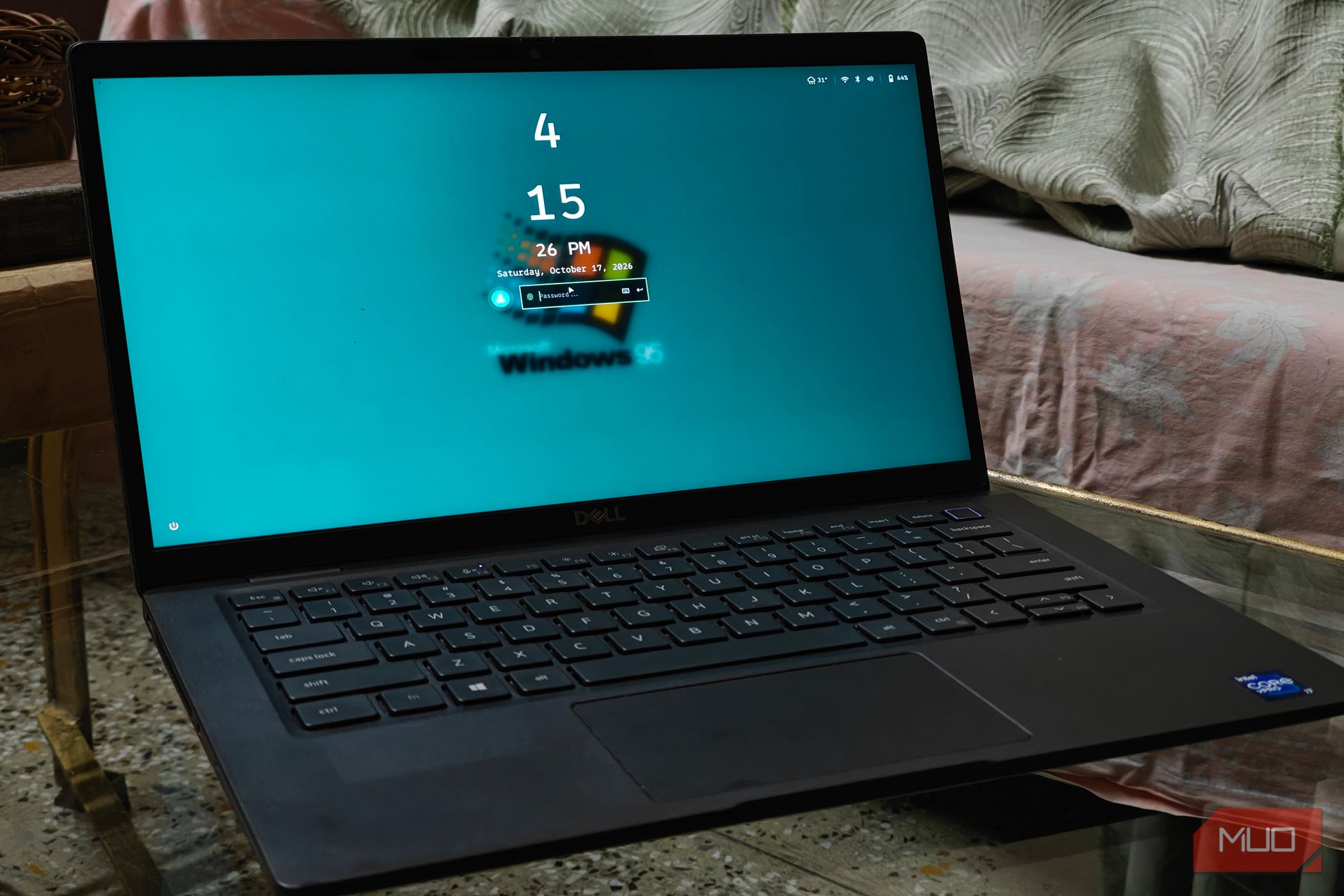
The MacBook Neo was a wake-up call for Windows laptop manufacturers, and showed that you really didn’t need to compromise on the core experiences to deliver a perfectly balanced machine for the vast majority of users. And that kind of still holds true to this day. The MacBook Neo is still one of the best entry level laptops you can find right now, along with newer Windows alternatives such as the 2026 Dell XPS 13. And that’s not even taking into account the used marketplace, which has amazing deals if you know where to look. I managed to snag a Dell Latitude 7320 for $600, and it has slowly transformed into my secondary machine in the past week since I bought it. Meet the Dell Latitude 7320 This is the souped up version of the laptop variant The mystery laptop in question is a Dell Latitude 7320, a compact and portable powerhouse. It comes equipped with an 11th generation Intel Core i7 (i7-1185G7; vPro variant) that has 4 cores and 8 threads to spare, along with a maximum clock speed of 4.8 GHz. Pair that with one TB of user-replaceable storage and 32 GB of LPDDR4x non-upgradeable RAM, and you have a rather solid laptop. My particular device also has a WWAN slot complete with a modem, although I haven’t been able to use it yet. These Latitudes are also incredibly well-built and can take a beating. While the shell is made of carbon fiber and plastic, it’s the sturdy kind of plastic, and will absorb any bumps and bruises along the way. It’s certainly not perfect, and in many ways is starting to show its age (it was released over 5 years ago, after all). Despite that, it is surprisingly capable for basic tasks and sometimes, even a bit extra. The Dell can do things the Neo can’t Dual Thunderbolt and Linux support, along with quadruple the amount of RAM The Dell Latitude 7320 is a far more capable laptop, and its port selection is incredibly diverse for such a small form factor. It has two USB-C Thunderbolt-capable ports on either side (both of which support charging), which makes it automatically superior to the MacBook Neo’s dual non-Thunderbolt USB-C ports. If that wasn’t enough of a slam dunk, the Latitude also has a microSD card slot, an HDMI port and a whole USB-A port, which is very much appreciated. It also has a WWAN module, which means you can stick in a SIM card. Combined with an eGPU dock, it makes for a practical and capable desktop replacement that can drive multiple monitors — something the Neo cannot do. It’s incredibly quiet too, even at the maxed out power and fan profiles. Temperatures are quite toasty though, and you have to expect upwards of 90 degrees Celsius during heavy workloads. That being said, the laptop never felt uncomfortably hot to the touch, and the active cooling helps. It also has a few niceties, like a physical webcam shutter and a fingerprint sensor, all of which work under Linux just fine. Speaking of operating systems, this works with both Windows 11 and Linux. I chose Arch Linux, and after installing the relevant Dell driver packages, was able to get things working without any issues. The MacBook Neo might not be my first pick, but it’s still quite a good deal There are some advantages here I can’t ignore The MacBook Neo is a newer machine, and one that you can still buy in stores with a warranty to go along with it. In case something goes wrong, you’ll be able to take it to the store and have them (or Apple) fix it for you. Used laptops usually do not come with any warranty to speak of, and most safeguards are dubious at best. There’s also the fact that the Dell has an objectively worse display, and by quite a margin. My particular variant isn’t the superior 400-nit version, and is instead relegated to the anemic 250-nit display. Combine that with a rather mediocre built-in panel that exhibits an ungodly amount of ghosting, and you have the worst of both worlds. The Neo’s display is far superior, despite being limited to 60 Hz as well. The Dell laptop also suffers from disappointingly mediocre battery life. I suspect it’s a combination of both the smaller 43 Wh battery and the power-hungry CPU (compared to the Neo, which runs on a super efficient mobile chip) that makes it so terrible. It barely lasts 4 hours on a good day, and that’s with power savings enabled. To be fair, the MacBook Neo doesn’t offer spectacular battery life either, but It’s still a lot better than the Dell. And there’s the fact that you have access to desktop macOS on the MacBook Neo, while you’ll be stuck with Windows 11 on the Dell Latitude. Operating systems are certainly a matter of personal preference, but I’d easily pick the MacBook Neo if it weren’t for its anemic 8 GB of RAM. macOS is just a better operating system, despite its many, many quirks. Honestly speaking? The MacBook Neo is a pretty great deal still and a perfect entry-level laptop, but nothing more. I just wish it had more RAM and a backlit keyboard. Future upgrade paths and repairability are what make the Dell superior Unlike the MacBook Neo, the Dell Latitude 7320 features a lot of upgradeable components. Yes, while the MacBook Neo is still shockingly repairable (for an Apple product), none of its components can be “upgraded”. The storage on the MacBook is soldered, for example. On the Dell, it’s as easy as installing a higher capacity M.2 drive later on — you have the ability to choose. It also has a microSD card reader, so you could always make for some extra, cheaper storage. Unfortunately, the RAM is soldered on both laptops, but the Dell variant I have has 32 GB of it, which is more than what I will ever need. The speakers are also a plus, and sound excellent for a Windows laptop. And there’s the whole upgrade path. A lot of these machines ship out with the base spec, and it is possible to swap out most components for a better quality one. The keyboard and battery, for example, can be swapped for backlit and higher-capacity ones, respectively. And this is exactly where business and enterprise laptops shine. They age tremendously well and are a viable alternative for Windows and Linux users. With hardware prices the way they are right now, it’s as good a time as any to look into the used market.