Summary
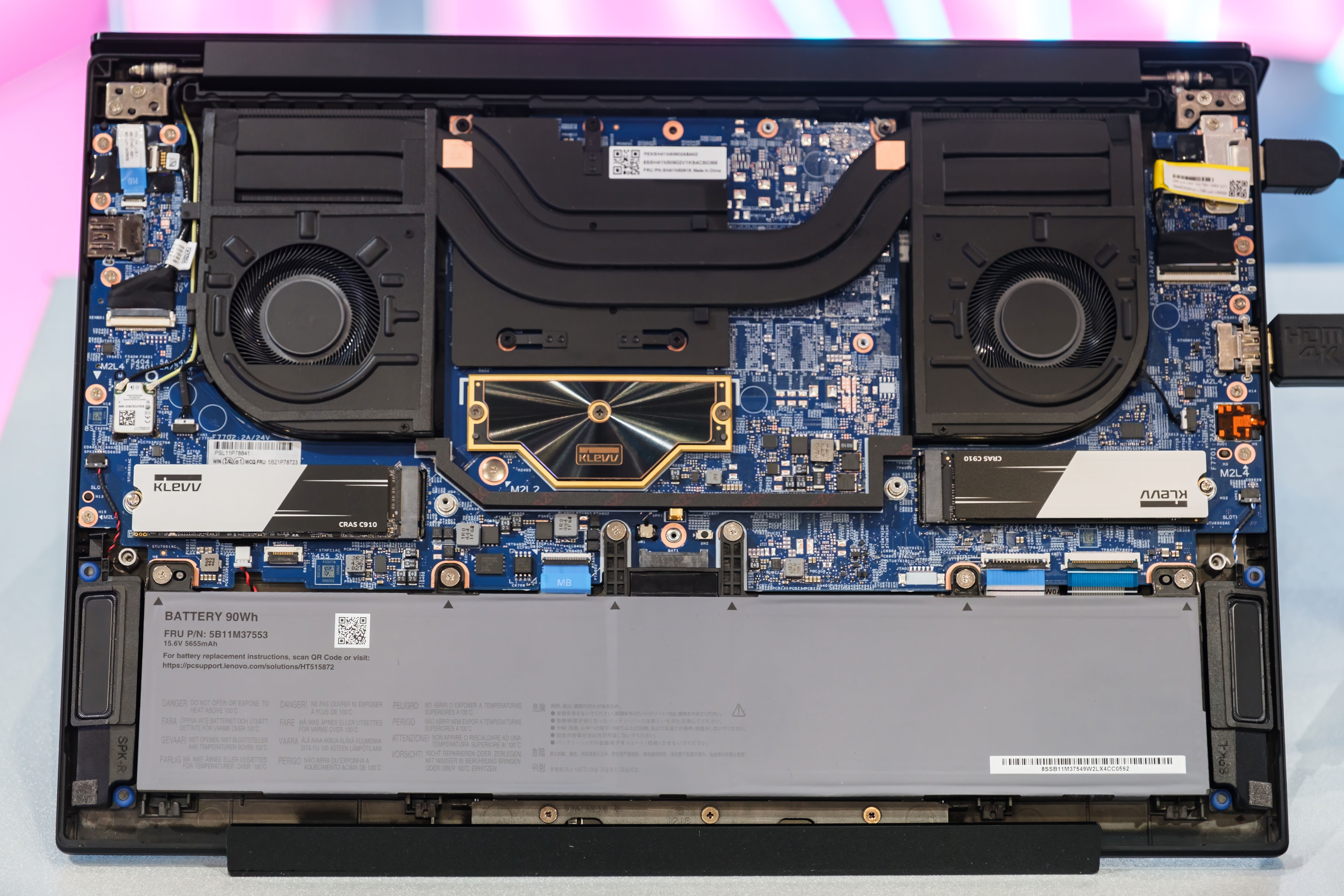
Soldered RAM is easy to hate. The majority of thin laptops manufactured in recent years have their RAM soldered directly to the motherboard, meaning you have almost zero chance of upgrading its capacity or fixing your laptop if something goes wrong. On the one hand, it’s anti-consumer, but it does come with other benefits, such as higher speeds and lower latency, both of which are really useful. But a new memory standard is changing all of that. LPCAMM2 brings the ultra-fast, low-latency RAM found on soldered devices to removable memory modules you can swap out and upgrade, finally handing some power back to consumers. LPCAMM2 makes RAM removable again Now with screws! LPCAMM2 stands for Low-Power Compression Attached Memory Module. Instead of an angled stick clicking into a slot, it’s a flat module pressed onto a grid of contacts on the motherboard and held in place with screws. That keeps the connection short and clean enough for LPDDR5X to run at full speed. On that, it’s worth noting that the module isn’t the RAM. It still holds LPDDR RAM in the module; it’s just that the module is removable with the RAM inserted, rather than linked directly to the motherboard. It also has another unique feature: a single LPCAMM2 module can run in dual-channel mode on its own, saving some of the space lost to returning to removable RAM modules. Normally, you’d need two RAM modules to achieve dual-channel mode. LPCAMM2 testing is also very positive. The first laptop to use LPCAMM2, the Lenovo ThinkPad P1 Gen 7 Intel Core Ultra 7, ran LPDDR5X at 7,467 MT/s on Micron’s 7,500 MT/s modules. That puts it firmly in the same range as soldered memory, which typically achieves between 7,500 and 9600 MT/s. There are other benefits, too. Lenovo claims its LPCAMM2 setup uses 61 percent less power and saves up to 64 percent space compared to traditional DDR5 SO-DIMM modules. The proof is right there: same speeds, better power efficiency, and the same space savings. But those aren’t the reasons we’re not seeing huge LPCAMM2 uptake. Removable RAM modules don’t solve RAMageddon Prices are similar, but at least you’re not locked in The problem is that LPCAMM2 isn’t free of the insane memory price increases seen worldwide across the past 12 months. After all, it’s still using LPDDR RAM, which means prices have risen in lockstep. Framework’s Laptop 13 is a prime example. As one of the first brands to consistently switch to LPCAMM2, it’s also had to set prices higher to account for market pressures. At launch, its 64GB LPCAMM2 modules were 1,600. Its 32GB modules ramped up to 2,000+ mark. But if you’re planning to buy a laptop that you’ll keep for a good few years, look for LPCAMM2 on the spec sheet and buy the capacity you need today rather than what you might need in a few years’ time. If prices come down, you’re laughing either way.