Summary
The first hard freeze is when car batteries quit, and the failure only looks sudden. The battery was already weak in October. Cold just exposed it. I’ve stood in my driveway with a 4Runner that wouldn’t turn over, and the fix that morning was a jump starter. The better fix is knowing a week ahead that the battery is on its way out.
A $15 multimeter gives you that warning. Two readings, one with the car off and one while it cranks, and you know whether this battery has a winter left in it. Hood up, probes on, maybe 30 seconds. Then you charge it, retest it, or replace it on your schedule instead of the weather’s.
Cold steals cranking power while the engine demands more of it
Roughly a third gone at 32°F, over half at 0°F
A car battery makes electricity through a chemical reaction between lead plates and sulfuric acid, and that reaction slows as the temperature drops. The usual numbers put a lead-acid battery at about two-thirds of its cranking power near 32°F and under half near 0°F. The battery hasn’t lost charge. It just can’t deliver current fast enough when it’s cold.
The engine makes things worse at the same moment. Oil thickens overnight, the crankshaft turns harder, and the starter pulls more current to get it moving. So the battery has less to give right when the engine asks for more. That squeeze is the same reason cordless tool packs feel weak in the cold, only a car battery has to push hundreds of amps instead of a few dozen.
A battery with plenty of margin shrugs this off. One that’s three or four winters old and already a little sulfated has no margin left, and the first morning in the teens is when you find out.
The resting check takes 10 seconds and tells you the state of charge
12.6V is healthy, 12.2V is about half, below 12.0V is trouble
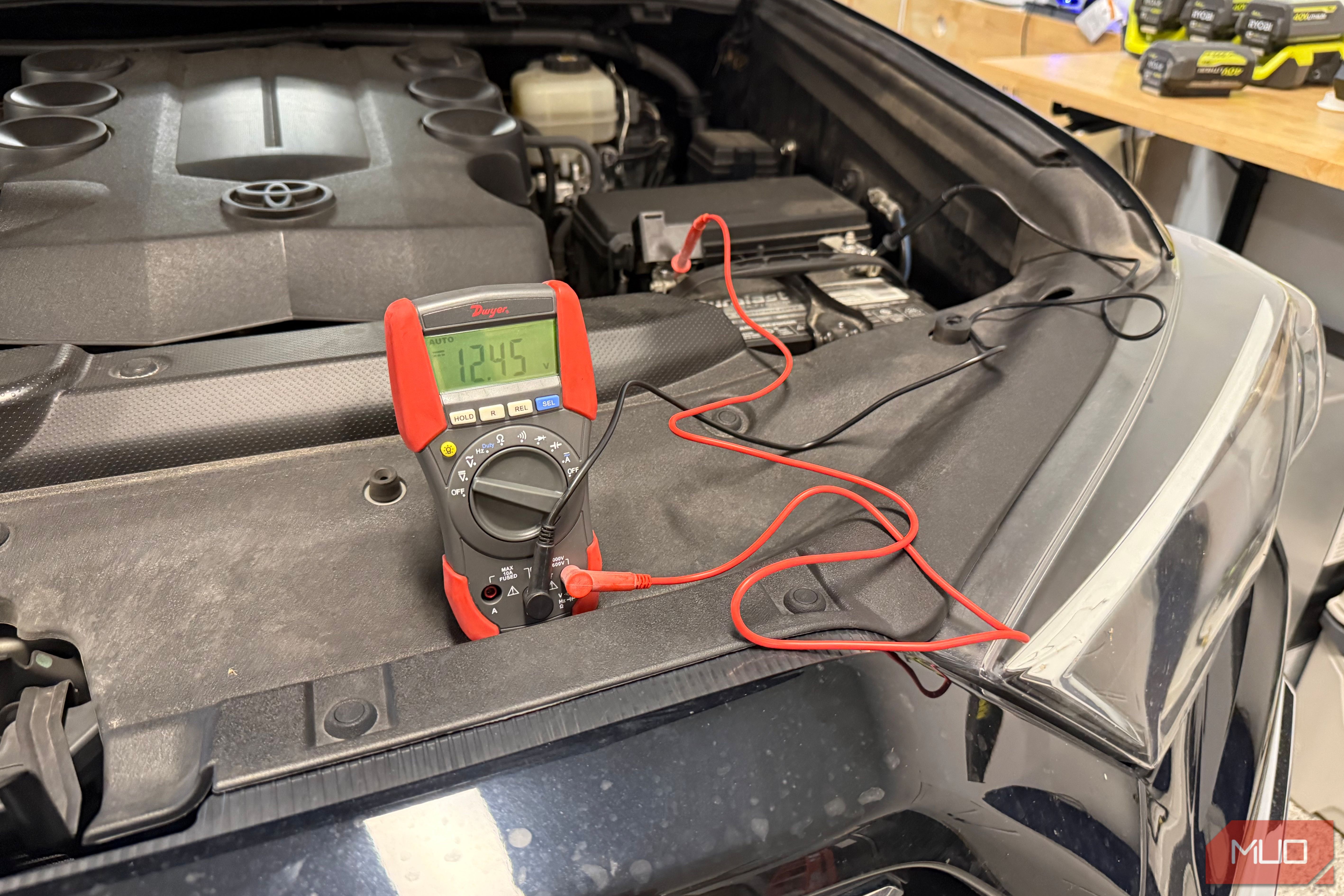
Set the meter to DC volts. On a manual-ranging meter, that’s the 20V setting. Red probe on the positive post, black on the negative, and the number shows up.
One catch. Driving or charging leaves a surface charge that inflates the reading for a few hours, so the honest number comes after the car sits overnight. In a hurry, I run the headlights for 30 seconds, kill them, and measure.
Full for a lead-acid battery is roughly 12.6V. Around 12.4V, it’s at roughly 75% charge. At 12.2V, it’s near half, and anything below 12.0V means the battery is deeply discharged and may already have some permanent damage.
My 4Runner runs a Duralast AGM, and AGM batteries rest a bit higher, usually 12.8V–12.9V when full, so a 12.6V reading on one of those is closer to 90% than to healthy. Mine read 12.45V at around 70°F after sitting in the garage for 8 hours, which is fine for an AGM but not a number I’d ignore.
The cranking check is where a weak battery gives itself away
Watch for the dip; it should hold around 10V
Resting voltage can lie. Plenty of worn batteries sit at 12.4V and then collapse the second the starter pulls 200 amps. The cranking test catches that.
Probes stay on the posts. Someone else turns the key, and I watch the screen. Alligator-clip leads make this a one-person job, and they cost a few dollars. The engine is about to start, so hands, meter, and wires stay well away from the belt and fan.
The voltage drops the moment the starter engages. That’s normal. The depth of the drop is the whole test. Hold at 10V or above while cranking, bounce back past 12V once it fires, and the battery is healthy. Sag into the mid-9s on a mild day, and it won’t make it through a 10°F morning, since the cold shaves off more. Anything that dips toward 8V means the battery is done, even if the engine caught this time.
My 4Runner held 10.3V during the crank. Good enough to leave alone, close enough that I’ll recheck after the first cold snap.
What the two numbers tell you to do next
Charge it, load-test it, or replace it on your terms
Weak at rest but strong under crank usually means the battery isn’t getting charged, not that it’s failing. Short trips starve the alternator, and a dome light or dash cam left on bleeds it overnight. Charge it, park it, test again. If it holds 12.6V the next morning, you’re fine.
Good resting voltage with a weak crank means the battery is aging. It still stores a charge but can’t deliver current under load. Most auto parts stores will load-test it for free, and the answer is usually a replacement within the season. Batteries last three to five years, and summer heat does the damage that winter reveals.
Both numbers weak means replace it now, before you’re doing the swap in a parking lot with cold hands.
Whatever you find, keep the backup ready. My jump starter rides in my 4Runner on a pack I check every week or so, strapped next to the inflator that handles other winter emergencies.
 AstroAI Digital Multimeter Tester
- Color
- Red
- Battery Capacity
- 9 V
- Tool Type
- Multi-meter
- Cordless?
- Yes Test it again after the first cold snap The readings move with the weather, so one test in November doesn’t settle the question for the winter. I’ll run mine again the first morning it hits the 20s. A battery that cranked at 10.3V in October air could drop to 9.6V in that cold, and the size of that fall says more than either number alone. A multimeter costs less than a sandwich and a coffee. A tow and an emergency battery swap cost a morning and a couple hundred dollars. Thirty seconds under the hood is the better trade, and it works on every car in the driveway.