Summary
Summary
- The $39.90 OpenDisplay monochrome dashboard promises up to two years of battery life with updates every 15 minutes.
- The pricier $75.90 color model lasts about one year and is better suited to calendars, schedules, and other slowly changing information.
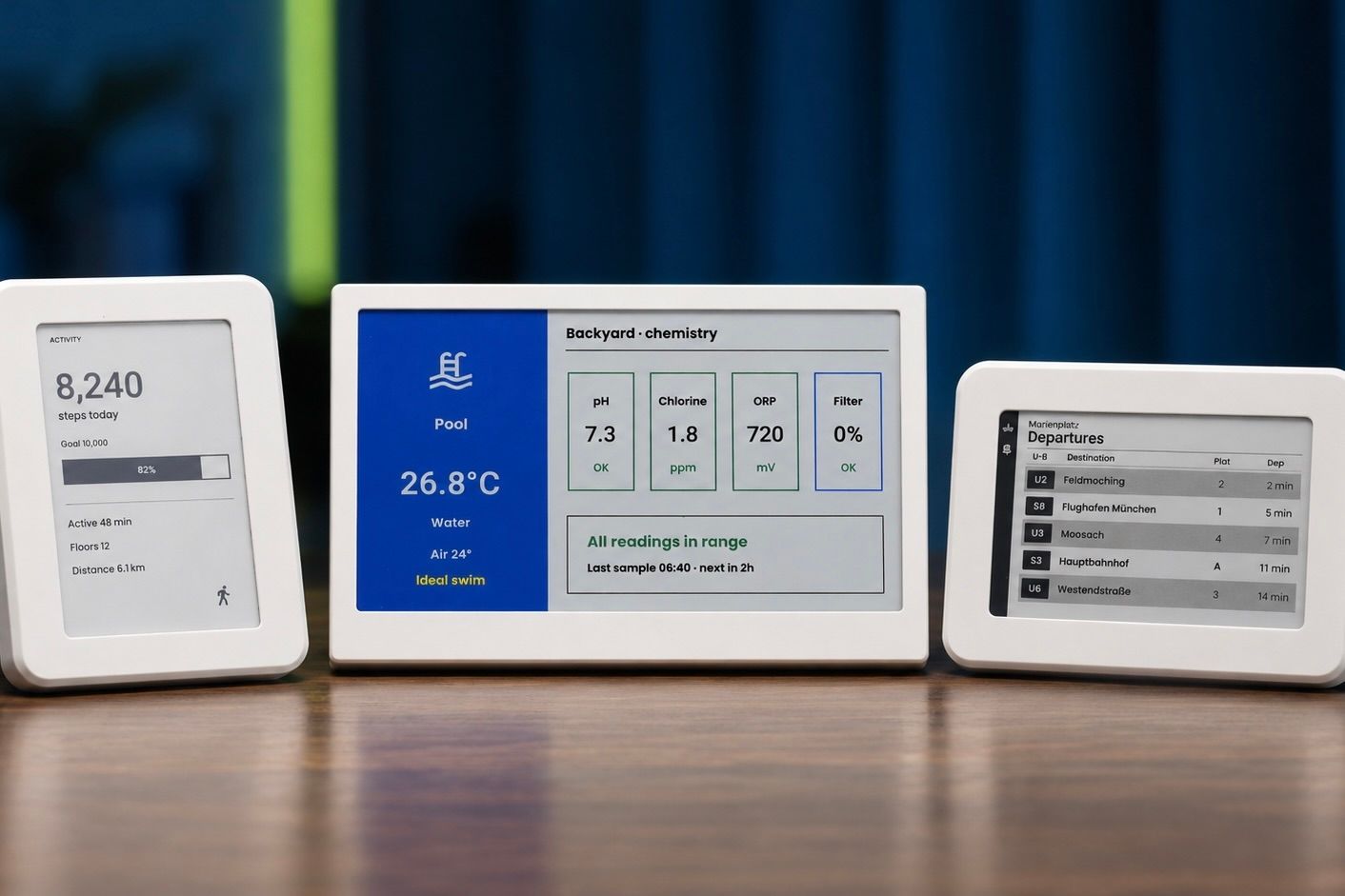
- Both models support Home Assistant and Bluetooth Low Energy, while arriving assembled with an enclosure, stand, battery, and preinstalled firmware. Very recently, Seeed Studio launched a 75.90, and the battery life only lasts for about a year — yes, “only” a year. Both models can receive information over Bluetooth Low Energy and have built-in features for showing weather, calendar inputs, sensor readings, reminders, and other data without having to remain connected to a power outlet. The cheaper OpenDisplay makes the better smart home dashboard And that’s especially true if you’re into affordable DIY projects The specs on both models are interesting. The smaller monochrome display packs an 800x400 e-paper panel with a Seeed XIAO EN05 board and a 2,000 mAh battery. Besides black and white, it can also take advantage of an optional four-level grayscale mode. More often than not, a smart home dashboard is used to display information that doesn’t need to be refreshed frequently. Thankfully, the e-paper display can do partial refreshes to preserve more battery. This is exactly how this display manages to get two years on a 2,000 mAh battery, but your phone display can barely last a full day of streaming with a battery that’s double in size. Seeed bases its two-year estimate on the screen receiving an update every 15 minutes. The result will naturally vary based on the use case, but that update schedule is frequent enough for room temperatures, electricity usage, and other smart home data. On the other hand, the 25 kit that lets you build an e-paper dashboard for your desk](https://www.makeuseof.com/this-25-kit-lets-you-build-an-e-paper-dashboard-for-your-desk/), but OpenDisplay would be right up your alley if you’d rather skip most of the assembly. The included enclosure, stand, and firmware allow you to use it right out of the box (and after configuration with the rest of your smart home, of course).