
Summary
This Week’s Awesome Tech Stories From Around the Web (Through August 29)
Every week, we scour the web for important, insightful, and fascinating stories in science and technology.
 Share
OpenAI Is Developing a ‘Persistent’ AI AgentMaxwell Zeff | Wired ()
“I visited the Cambridge, Massachusetts, offices of a startup called Generalist AI, where I watched robot arms perform simple chores like stacking cups, putting blocks into bowls, and the like. I was astonished by how quickly they figured things out—it was reminiscent of a flesh-and-blood person. The arms mastered a range of tasks after ingesting a short, instructional video and, most impressively, no specific training for a given task.”
Fully Autonomous Russian Drone Kills Three UkrainiansBrendan Ruberry | Semafor
“Though AI has often been used in the final stages of human-planned strikes, the reported incident crosses a dangerous threshold, analysts said, leaving machines to interpret the laws of war and to determine what constitutes a legitimate target. ‘This is a risk for the whole world,’ a Ukrainian commander said. ‘In a few years, we will be living in a Terminator movie.‘”
Researchers Get Two Genetic Codes to Work at the Same TimeJohn Timmer | Ars Technica
“Now, researchers have found a way to operate two separate genetic codes simultaneously, avoiding the need to do any work to compensate for altering the code that every protein in a cell relies on. They didn’t test it in an actual cell, and it might cause some problems there. But it’s a creative solution that should accelerate some synthetic biology work.”
An Experimental Single-Time Treatment Slashed Cholesterol for a YearCarolyn Y. Johnson | The New York Times ()
“The quest has been to find practical ways to mimic [the benefits of replacing old blood with young blood observed in lab mice]. And that is something [Irina] Conboy says she’s now achieved by hitting on a combination of two existing drugs that produce youthful effects—but without the need for any bodily fluid exchange.”
What We Still Don’t Know About OpenAI’s Hugging Face HackMaxwell Zeff | Wired ()
“Mr. Musk’s ambition is for the site to host more than 30 rocket launches a day, to support both Starlink—the firm’s existing broadband-from-space service—and its plans to fly data centers into orbit, where they would benefit from both free solar power and an absence of NIMBYs. …If Mr. Musk hits his 30-launches-a-day target, his Louisiana purchase would allow SpaceX to fly about 2m tons of payload into orbit every year, up from about 3,800 tonnes in 2025.”
Walmart Is 3D Printing the Future of Big Box StoresPatrick Sisson | Fast Company
“For the last two years, contractors working for Walmart have used 3D-printed construction at a handful of sites across the US. …It’s the country’s largest deployment of 3D-printed architecture in the commercial sector. The retailer’s scale is catalyzing the growth and adoption of the technology, which promises to construct buildings faster and more affordably.”
Robotaxis Are Real Now—So Is the PushbackRani Molla | The Verge
“The consequences could look very different as autonomous fleets grow from thousands of vehicles to hundreds of thousands. That’s why the battles taking shape across the country are increasingly about the terms of expansion: what companies have to prove before they grow, what they owe cities and workers, and how much control cities and states should have over their operations.”
Kids Outlearn AI—and We Still Don’t Know WhyElise Cutts | MIT Technology Review ($)
“‘The progress recently has been amazing,’ Michael C. Frank, a cognitive scientist at Stanford University, says of LLMs. ‘But we still have to burn down a forest and scrape the entire sum of all human knowledge to re-create this milestone that happens in our living rooms over the course of a year.’ [This yawning divide] raises a tantalizing question for cognitive scientists and a challenge for the architects of AI models: How is it that kids can still outperform the most linguistically sophisticated machines ever built?”
Related Articles
Share
OpenAI Is Developing a ‘Persistent’ AI AgentMaxwell Zeff | Wired ()
“I visited the Cambridge, Massachusetts, offices of a startup called Generalist AI, where I watched robot arms perform simple chores like stacking cups, putting blocks into bowls, and the like. I was astonished by how quickly they figured things out—it was reminiscent of a flesh-and-blood person. The arms mastered a range of tasks after ingesting a short, instructional video and, most impressively, no specific training for a given task.”
Fully Autonomous Russian Drone Kills Three UkrainiansBrendan Ruberry | Semafor
“Though AI has often been used in the final stages of human-planned strikes, the reported incident crosses a dangerous threshold, analysts said, leaving machines to interpret the laws of war and to determine what constitutes a legitimate target. ‘This is a risk for the whole world,’ a Ukrainian commander said. ‘In a few years, we will be living in a Terminator movie.‘”
Researchers Get Two Genetic Codes to Work at the Same TimeJohn Timmer | Ars Technica
“Now, researchers have found a way to operate two separate genetic codes simultaneously, avoiding the need to do any work to compensate for altering the code that every protein in a cell relies on. They didn’t test it in an actual cell, and it might cause some problems there. But it’s a creative solution that should accelerate some synthetic biology work.”
An Experimental Single-Time Treatment Slashed Cholesterol for a YearCarolyn Y. Johnson | The New York Times ()
“The quest has been to find practical ways to mimic [the benefits of replacing old blood with young blood observed in lab mice]. And that is something [Irina] Conboy says she’s now achieved by hitting on a combination of two existing drugs that produce youthful effects—but without the need for any bodily fluid exchange.”
What We Still Don’t Know About OpenAI’s Hugging Face HackMaxwell Zeff | Wired ()
“Mr. Musk’s ambition is for the site to host more than 30 rocket launches a day, to support both Starlink—the firm’s existing broadband-from-space service—and its plans to fly data centers into orbit, where they would benefit from both free solar power and an absence of NIMBYs. …If Mr. Musk hits his 30-launches-a-day target, his Louisiana purchase would allow SpaceX to fly about 2m tons of payload into orbit every year, up from about 3,800 tonnes in 2025.”
Walmart Is 3D Printing the Future of Big Box StoresPatrick Sisson | Fast Company
“For the last two years, contractors working for Walmart have used 3D-printed construction at a handful of sites across the US. …It’s the country’s largest deployment of 3D-printed architecture in the commercial sector. The retailer’s scale is catalyzing the growth and adoption of the technology, which promises to construct buildings faster and more affordably.”
Robotaxis Are Real Now—So Is the PushbackRani Molla | The Verge
“The consequences could look very different as autonomous fleets grow from thousands of vehicles to hundreds of thousands. That’s why the battles taking shape across the country are increasingly about the terms of expansion: what companies have to prove before they grow, what they owe cities and workers, and how much control cities and states should have over their operations.”
Kids Outlearn AI—and We Still Don’t Know WhyElise Cutts | MIT Technology Review ($)
“‘The progress recently has been amazing,’ Michael C. Frank, a cognitive scientist at Stanford University, says of LLMs. ‘But we still have to burn down a forest and scrape the entire sum of all human knowledge to re-create this milestone that happens in our living rooms over the course of a year.’ [This yawning divide] raises a tantalizing question for cognitive scientists and a challenge for the architects of AI models: How is it that kids can still outperform the most linguistically sophisticated machines ever built?”
Related Articles
 Are We on the Verge of an Intelligence Explosion? Maybe Not.
 An ‘AI Legal Team’ Has Won Its First Case. It’s a Rare Victory for Access to Justice.
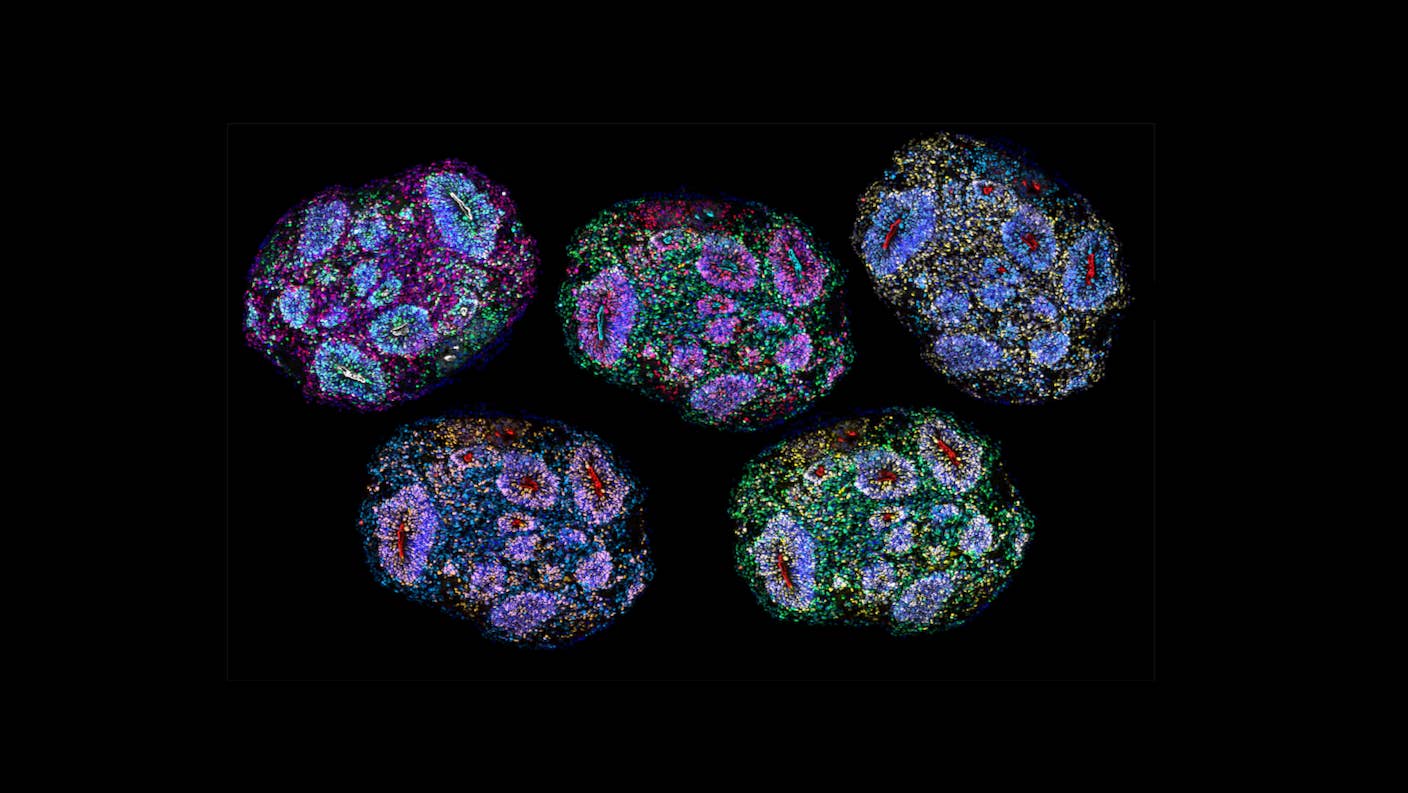 Mini Brains Grown for Five Years Matured Like Human Brains
What we’re reading
Mini Brains Grown for Five Years Matured Like Human Brains
What we’re reading