
Summary
This Week’s Awesome Tech Stories From Around the Web (Through September 5)
 Image Credit
D Designs on Unsplash
Share
Why Everyone in Quantum Computing Is Buzzing About Google’s Move Into ‘Neutral Atoms’Adam Bluestein | Fast Company
“Google’s interest sends a clear signal: Neutral atom quantum computing has arrived. And while it may not replace superconducting as the leading approach, the technology is primed to be a key player in the race to quantum utility, the threshold where the value of quantum computers finally eclipses the cost of running them.”
A Transplanted Pig Kidney Is Still Working After a Record-Setting 9 Months in a PatientEmily Mullin | Wired ()
“This singularity isn’t coming at the hands of a higher form of intelligence. Nothing about this technology is inevitable. It is thrilling, terrifying, and ultimately convenient to assign agency and then blame to machines. But today’s chaos was not ‘injected into the system’ by technology, as [Sam] Altman wrote more than a decade ago; the destruction is the system. It’s not God in the machine; it’s us.”
OpenAI Technique in ‘Astra’ Model Sparks Security ConcernsAmir Efrati, Stephanie Palazzolo, and Rocket Drew | The Information ()`
“It’s difficult to engineer microbes that can reliably provide nitrogen for crops while also thriving themselves. A startup called Switch Bioworks is taking a new approach that essentially allows microbes to establish themselves and grow into healthy colonies before shifting into nitrogen-producing mode. ‘We have to reinvent fertilizer,’ says Tim Schnabel, the company’s founder and CEO.”
Waymo Accelerates Robotaxi Expansion With Launches in Denver, San Diego, and TampaKirsten Korosec | TechCrunch
“Waymo has started to offer its robotaxi service to the public in Denver, San Diego, and Tampa, extending the Alphabet-owned company’s commercial operations to 14 US cities. …The expansion has increased its fleet of self-driving Jaguar I-Pace hatchbacks and a new minivan called the Ojai to more than 4,000 vehicles.”
Be Part of the Future
Sign up to receive top stories about groundbreaking technologies and visionary thinkers from SingularityHub.
Image Credit
D Designs on Unsplash
Share
Why Everyone in Quantum Computing Is Buzzing About Google’s Move Into ‘Neutral Atoms’Adam Bluestein | Fast Company
“Google’s interest sends a clear signal: Neutral atom quantum computing has arrived. And while it may not replace superconducting as the leading approach, the technology is primed to be a key player in the race to quantum utility, the threshold where the value of quantum computers finally eclipses the cost of running them.”
A Transplanted Pig Kidney Is Still Working After a Record-Setting 9 Months in a PatientEmily Mullin | Wired ()
“This singularity isn’t coming at the hands of a higher form of intelligence. Nothing about this technology is inevitable. It is thrilling, terrifying, and ultimately convenient to assign agency and then blame to machines. But today’s chaos was not ‘injected into the system’ by technology, as [Sam] Altman wrote more than a decade ago; the destruction is the system. It’s not God in the machine; it’s us.”
OpenAI Technique in ‘Astra’ Model Sparks Security ConcernsAmir Efrati, Stephanie Palazzolo, and Rocket Drew | The Information ()`
“It’s difficult to engineer microbes that can reliably provide nitrogen for crops while also thriving themselves. A startup called Switch Bioworks is taking a new approach that essentially allows microbes to establish themselves and grow into healthy colonies before shifting into nitrogen-producing mode. ‘We have to reinvent fertilizer,’ says Tim Schnabel, the company’s founder and CEO.”
Waymo Accelerates Robotaxi Expansion With Launches in Denver, San Diego, and TampaKirsten Korosec | TechCrunch
“Waymo has started to offer its robotaxi service to the public in Denver, San Diego, and Tampa, extending the Alphabet-owned company’s commercial operations to 14 US cities. …The expansion has increased its fleet of self-driving Jaguar I-Pace hatchbacks and a new minivan called the Ojai to more than 4,000 vehicles.”
Be Part of the Future
Sign up to receive top stories about groundbreaking technologies and visionary thinkers from SingularityHub.
 Physicists Detected a Signal That Defies Explanation. It Could Be Dark Matter—or Something StrangerEllyn Lapointe | Gizmodo
“Researchers running the LUX-ZEPLIN (LZ) dark matter experiment, an ultra-sensitive particle detector buried inside an abandoned gold mine, have recorded a single particle interaction that can’t be explained by any known background signals from normal matter. This event, described in a preprint set to be published in the journal Physical Review Letters, is arguably the most compelling candidate for a direct dark matter detection to date. But the authors say it’s still too soon to close this case.”
The Cybercab Is Almost Here. Now Comes the Hard PartAarian Marshall | Wired ()
“A nonprofit organization called the Fermi Explorer Mission announced today that it intends to launch a spacecraft to our nearest star system by the end of 2029. It’s a hugely ambitious mission—if all goes well, the spacecraft could take up to 80,000 years to arrive at Alpha Centauri, which is 4.4 light-years away. And the spacecraft will follow a novel trajectory discovered by an AI system developed by Physical Superintelligence (PSI), an AI physics research lab.”
Related Articles
Physicists Detected a Signal That Defies Explanation. It Could Be Dark Matter—or Something StrangerEllyn Lapointe | Gizmodo
“Researchers running the LUX-ZEPLIN (LZ) dark matter experiment, an ultra-sensitive particle detector buried inside an abandoned gold mine, have recorded a single particle interaction that can’t be explained by any known background signals from normal matter. This event, described in a preprint set to be published in the journal Physical Review Letters, is arguably the most compelling candidate for a direct dark matter detection to date. But the authors say it’s still too soon to close this case.”
The Cybercab Is Almost Here. Now Comes the Hard PartAarian Marshall | Wired ()
“A nonprofit organization called the Fermi Explorer Mission announced today that it intends to launch a spacecraft to our nearest star system by the end of 2029. It’s a hugely ambitious mission—if all goes well, the spacecraft could take up to 80,000 years to arrive at Alpha Centauri, which is 4.4 light-years away. And the spacecraft will follow a novel trajectory discovered by an AI system developed by Physical Superintelligence (PSI), an AI physics research lab.”
Related Articles
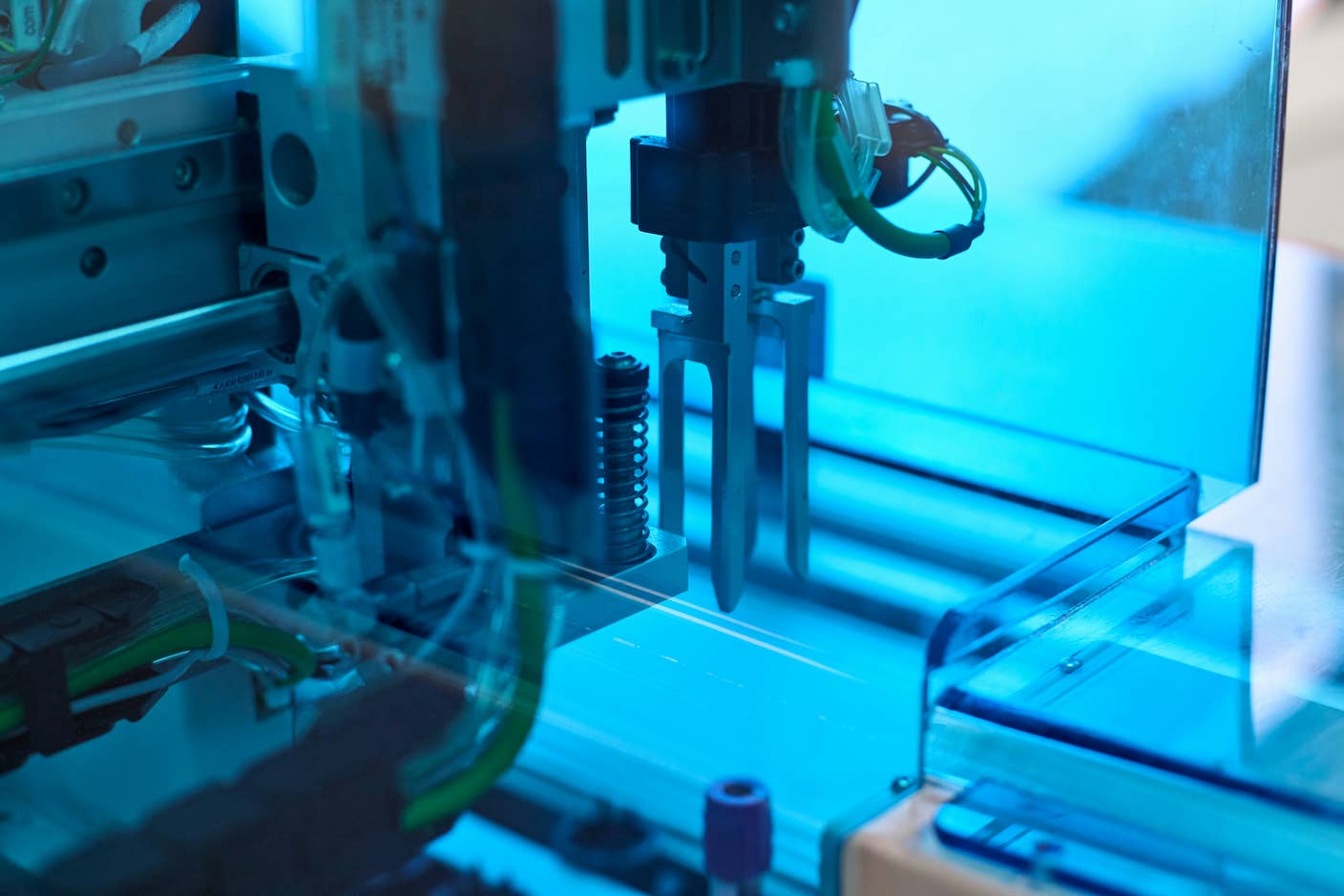 Anthropic’s Claude Can Now Autonomously Run Science Experiments With Lab Equipment
 Content for Clicks: AI Is Tearing Up the Web’s Social Contract
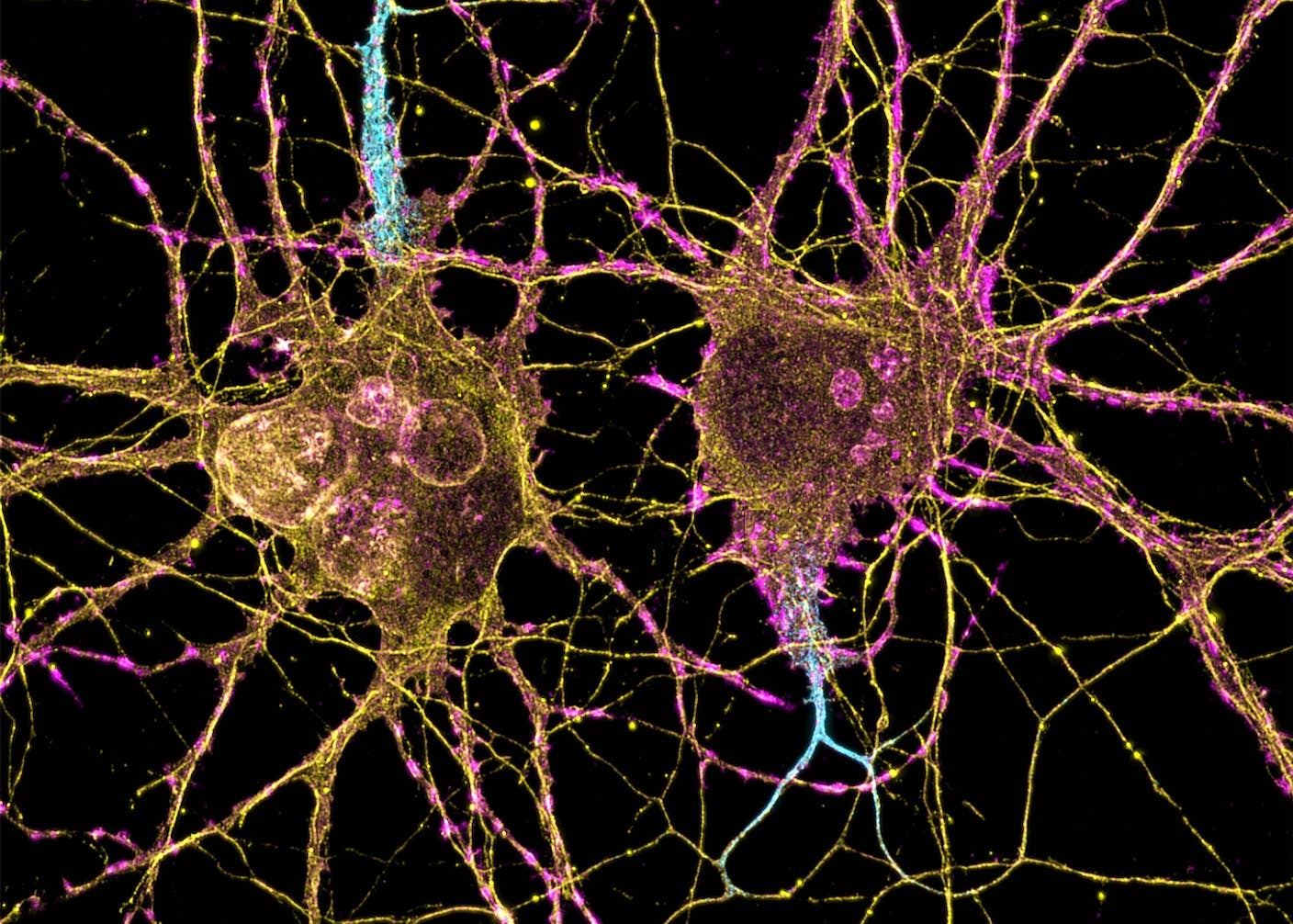 This Drug Makes New Neurons in the Brain. Scientists Say It Reversed Alzheimer’s Symptoms in Mice.
What we’re reading
This Drug Makes New Neurons in the Brain. Scientists Say It Reversed Alzheimer’s Symptoms in Mice.
What we’re reading