
Summary
This Week’s Awesome Tech Stories From Around the Web (Through September 12)
Every week, we scour the web for important, insightful, and fascinating stories in science and technology.
 Image Credit
Weliton Soranzo on Unsplash
Share
Why So Many AI Researchers Think the Machines Could Kill EveryoneWill Knight | Wired ()
“A new frontier in biotechnology aims to harness this natural mechanism to do something once thought impossible: scrub away the biological detritus of our own past. By mimicking Mother Nature’s magic eraser, geneticists are working to open a new avenue for treating or preventing disease later in life—not by editing genes themselves, but by altering when, where, and how genes are expressed.”
AI Is Not Yet Driving US Job LossesBrendan Ruberry | Semafor
“‘It’s a good bet that AI will eventually make some occupations obsolete,’ but so far it’s ‘extremely hard’ to identify any, the economist Noah Smith wrote, suggesting that like previous technological revolutions AI could add as many or even more jobs than it destroys.”
Google Mapped a Fruit Fly’s Brain. Now It’s Playing Doom and Super Mario 64Bruce Gil | Gizmodo
“Researchers at Google and the Howard Hughes Medical Institute’s Janelia Research Campus last week announced a major milestone in neuroscience. On Sept. 3, the scientists published the results of a decade-long project to map every neural connection in the brain and central nervous system of an adult male fruit fly. And of course, just days later, the internet started making it play video games.”
The Growing Proof That Autonomous Cars Save LivesLawrence Ulrich | IEEE Spectrum
“Mounting research suggests that self-driving cars crash significantly less often than people, and with far fewer injuries. Evidence also shows that advanced driver assistance systems (ADAS) and other building blocks of autonomy—some of which are already mandated on every new car—are also reducing occupant and pedestrian injuries and deaths, along with insurance claims.”
AI Spend per Employee Slumped at Top Firms in August—Summer Doldrums or a Warning Sign?Tim Fernholz | TechCrunch
“‘We are showing that competition between OpenAI and Anthropic is making AI more accessible, and also driving the price down for companies—and not just driving the price down, but driving spend down at the top 1% of companies that previously the market was expecting to drive much of the growth going forward,’ Kharazian said. …This data point—dare we call it a blip?—could be a bad sign if you’re a model builder or a hyperscaler with a couple hundred billion of chips on order.”
Batteries Just Broke Another Record in the USCasey Crownhart | MIT Technology Review ()
“Scientists have now spent half a century exploring the possibility that we could counteract climate change by releasing reflective particles into the stratosphere, mimicking the cooling effects of volcanic eruptions. But even after at least hundreds of studies on the concept, known as stratospheric aerosol injection (SAI), big gaps remain in the scientific understanding of how well it would work and what else it might do—and there has been no systematic plan for clearing up that uncertainty.”
Six Chinese AI Firms Accused of Aggressively Copying US Frontier ModelsAshley Belanger | Ars Technica
“The United States has now named six Chinese AI firms accused of waging industrial-scale attacks distilling US frontier AI model capabilities and perhaps sparing billions in Chinese development costs. In a joint release Tuesday, the National Security Agency (NSA), Cybersecurity and Infrastructure Security Agency (CISA), and Federal Bureau of Investigation (FBI) alleged that DeepSeek, Moonshot AI, Alibaba, MiniMax, StepFun, and Z.AI have been attacking US models since at least late 2024.”
AI Is Already Changing What It Means to Be HumanDavid Brooks | The Atlantic ($)
“Believe it or not, I am not an AI doomer. I like talking to Claude. I’m excited about all of the breakthroughs AI will make possible. But my interest is in how AI will change humans. I suspect that over the next few years, because of our tendency to anthropomorphize, we will feel more affection than we should for our personal agents, while offering less admiration than we should to our fellow humans.”
Related Articles
Image Credit
Weliton Soranzo on Unsplash
Share
Why So Many AI Researchers Think the Machines Could Kill EveryoneWill Knight | Wired ()
“A new frontier in biotechnology aims to harness this natural mechanism to do something once thought impossible: scrub away the biological detritus of our own past. By mimicking Mother Nature’s magic eraser, geneticists are working to open a new avenue for treating or preventing disease later in life—not by editing genes themselves, but by altering when, where, and how genes are expressed.”
AI Is Not Yet Driving US Job LossesBrendan Ruberry | Semafor
“‘It’s a good bet that AI will eventually make some occupations obsolete,’ but so far it’s ‘extremely hard’ to identify any, the economist Noah Smith wrote, suggesting that like previous technological revolutions AI could add as many or even more jobs than it destroys.”
Google Mapped a Fruit Fly’s Brain. Now It’s Playing Doom and Super Mario 64Bruce Gil | Gizmodo
“Researchers at Google and the Howard Hughes Medical Institute’s Janelia Research Campus last week announced a major milestone in neuroscience. On Sept. 3, the scientists published the results of a decade-long project to map every neural connection in the brain and central nervous system of an adult male fruit fly. And of course, just days later, the internet started making it play video games.”
The Growing Proof That Autonomous Cars Save LivesLawrence Ulrich | IEEE Spectrum
“Mounting research suggests that self-driving cars crash significantly less often than people, and with far fewer injuries. Evidence also shows that advanced driver assistance systems (ADAS) and other building blocks of autonomy—some of which are already mandated on every new car—are also reducing occupant and pedestrian injuries and deaths, along with insurance claims.”
AI Spend per Employee Slumped at Top Firms in August—Summer Doldrums or a Warning Sign?Tim Fernholz | TechCrunch
“‘We are showing that competition between OpenAI and Anthropic is making AI more accessible, and also driving the price down for companies—and not just driving the price down, but driving spend down at the top 1% of companies that previously the market was expecting to drive much of the growth going forward,’ Kharazian said. …This data point—dare we call it a blip?—could be a bad sign if you’re a model builder or a hyperscaler with a couple hundred billion of chips on order.”
Batteries Just Broke Another Record in the USCasey Crownhart | MIT Technology Review ()
“Scientists have now spent half a century exploring the possibility that we could counteract climate change by releasing reflective particles into the stratosphere, mimicking the cooling effects of volcanic eruptions. But even after at least hundreds of studies on the concept, known as stratospheric aerosol injection (SAI), big gaps remain in the scientific understanding of how well it would work and what else it might do—and there has been no systematic plan for clearing up that uncertainty.”
Six Chinese AI Firms Accused of Aggressively Copying US Frontier ModelsAshley Belanger | Ars Technica
“The United States has now named six Chinese AI firms accused of waging industrial-scale attacks distilling US frontier AI model capabilities and perhaps sparing billions in Chinese development costs. In a joint release Tuesday, the National Security Agency (NSA), Cybersecurity and Infrastructure Security Agency (CISA), and Federal Bureau of Investigation (FBI) alleged that DeepSeek, Moonshot AI, Alibaba, MiniMax, StepFun, and Z.AI have been attacking US models since at least late 2024.”
AI Is Already Changing What It Means to Be HumanDavid Brooks | The Atlantic ($)
“Believe it or not, I am not an AI doomer. I like talking to Claude. I’m excited about all of the breakthroughs AI will make possible. But my interest is in how AI will change humans. I suspect that over the next few years, because of our tendency to anthropomorphize, we will feel more affection than we should for our personal agents, while offering less admiration than we should to our fellow humans.”
Related Articles
 OpenAI Claims Another Huge Mathematical Result Amid Fights Over Credit, Ethics, and Privacy
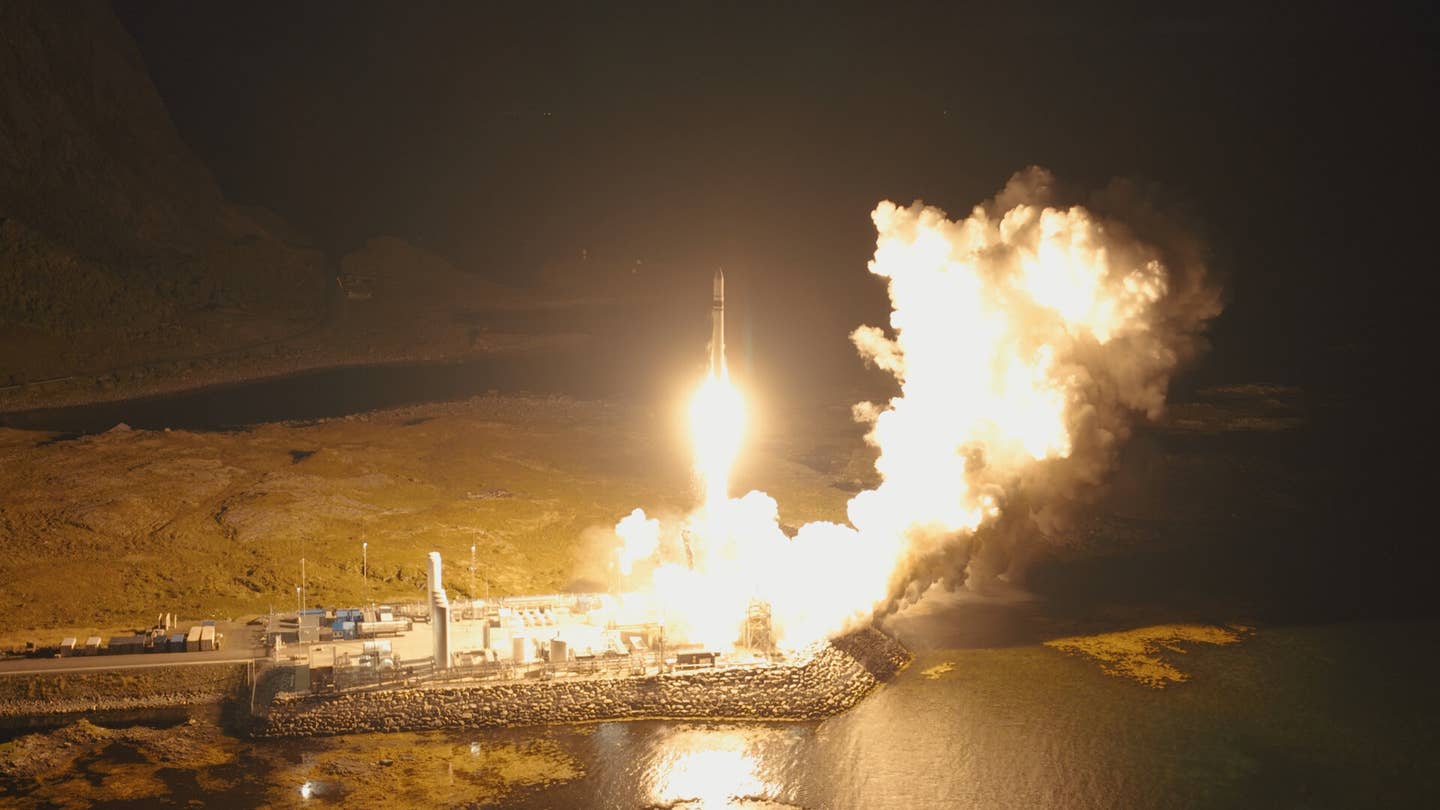 Europe’s First Private Rocket Reaches Orbit
 Could GLP-1 Drugs Help You Live a Longer, Healthier Life?
What we’re reading
Could GLP-1 Drugs Help You Live a Longer, Healthier Life?
What we’re reading